Showing posts with label angels. Show all posts

Wednesday, December 11, 2019

"Somebody's Gotta Be Mary!"

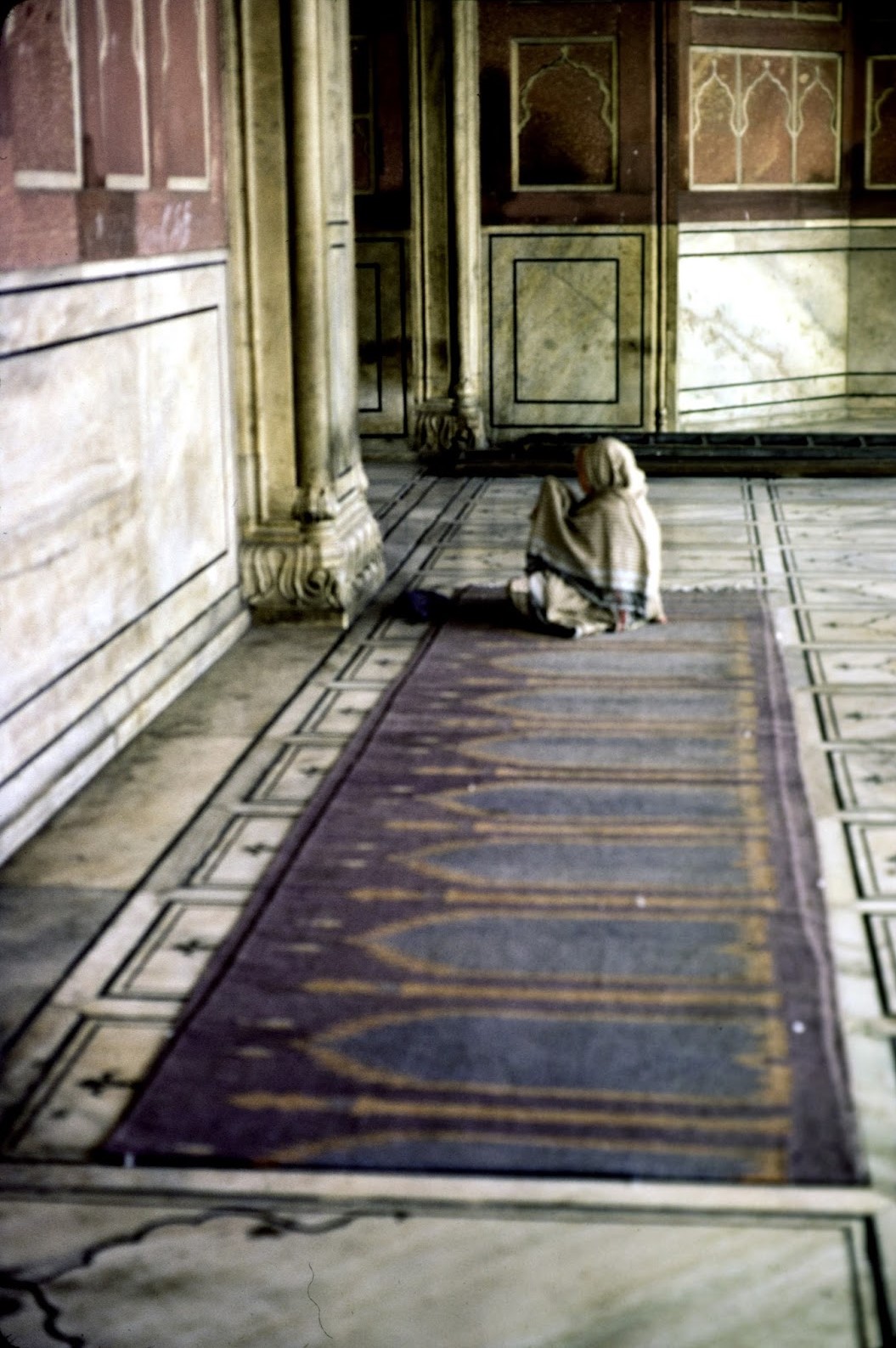
India, January 1983

Once upon a time, respectable members of a respectable church decided to perform a Christmas pageant, and congregants were vying for parts. The big competition was around the roles of the Magi, the Eastern religious scholars bearing gold and frankincense and myrrh. Many were taken with their absolutely fa-bu-lous costumes, reeking of wealth and privilege and prestige.

But there were also many who wanted to demonstrate their own humility by playing the poor shepherds watching their flocks by night, knowing that they’d get to see a sky full of angels singing of peace on earth, goodwill toward all, as well as visit the baby Jesus lying in a manger with a halo for a hanging playtoy.

Others wanted to be those high and mighty angels, who, in our contemporary, secular times seem to represent only themselves, cutely and cherubically and all-too-benignly making guest appearances on wrapping paper, greeting cards, and Christmas films, instead of being the fierce and frightful presence of God they are in the Bible—so terrible, they often had to say “fear not!”—awesomely calling individuals to radical action rather than offering sentimental appeasement.

For the manger scene itself, as you may have guessed, it was easy among the staid and high-end church members to cast the roles of the ox and of the ass and of the many docile sheep. Easy also to cast the unwelcoming innkeeper and King Herod frightened of losing power and the indifferent Caesar Augustus only interested in the bottom line, the church budget.

A few were at least willing to play one of the pageant’s two leading characters, Joseph, who at first wanted to put his pregnant betrothed away in a closet somewhere to avoid public disgrace. You will recall that Joseph had a change of heart after having his own vision of an angel, then choosing to serve as a kind of behind-the-scenes partner to the inevitably unfolding will of God, a ferocious will contrary to decency and order, a decency and order Joseph wanted to at least appear to uphold by his outward compliance.

But nobody wanted to play the role of Mary in the Christmas pageant. “Somebody’s gotta play Mary!” the stage manager Gabriel shouted out, sounding very much like the gravelly voice of Harvey Fierstein. “No Mary, no Jesus!” he cried bluntly.

You see, nobody respectable wanted to play Mary because of the shame of her unwed pregnancy. And absolutely no one wanted to go through the bloody and painful job of giving birth to a new thing.

Mary’s fidelity to God, her willingness to say, “Here I am the servant of the Lord; let it be with me according to your word”—all of this counted for naught in the eyes of these good people. The Holy Spirit was knitting together in her womb the new thing for which the prophets hoped, yet, like all nativities of the Spirit, “the powers that be” trembled, including these dignified religious types. Mary’s birthing this child would be an unsettling and unclean act, embarrassing rather than admirable.

“Mary is not a good role model for our children,” someone said.

Stage manager Gabriel again implored the crowd, “C’mon! As Mary, you get to magnify and rejoice in the Lord and be called blessed by generations to come, though admittedly not this generation. You get to serve as God’s instrument to scatter the proud in their presumptuous imaginations, lifting the downtrodden even as the powerful are taken off their high horse. Your mission is to fill the hungry with good things, and to remind the privileged of their own poverty. This is a good thing. Really.”

Visiting the church for the first time, a timid and small young girl came forward, a recent immigrant with olive skin and dark brown eyes and thick black hair, and simply said, “Here am I.” Gabriel, exasperated by everyone else’s resistance, asked, “So—ya wanna be Mary?” And because his language was new to her, she simply quoted Mary’s line, “Let it be with me according to your word.”

And so the respectable church filled with respectable members was able to put on its pageant, reliving the Christmas story, but they did not live happily ever after. For the nature of all nativities of the Spirit humbles those with privilege and uplifts the underprivileged, shaming the proud and bringing mercy and justice to the oppressed.

But that can’t happen unless someone is willing to be Mary.


I posted this on December 7, 2016 and thought new blog followers might like to read it. Have a meaningful Advent and Christmas!

Progressive Christian Reflections is entirely supported by reader donations. To support this blog: https://mccchurch.org/ministries/progressive-christian-reflections/
Scroll down to the donate link below its description. Thank you!

Copyright © 2016 by Chris R. Glaser. Permission granted for non-profit use with attribution of author and blogsite. Other rights reserved. 

Wednesday, July 18, 2018

A Death in the Neighborhood


This is a true story, but the names of the family members have been changed to protect their privacy. A few weeks ago I showed it to “Susan” for the first time, and asked her permission to use it on my blog, and she gladly agreed. I gave it as a talk for Atlanta’s Midtown Spiritual Community on July 28, 2004.

An order of the day for me is walking my dogs, and before the summer day became a furnace, I decided to take them. Outside was bright and colorful and inviting. Royal blue sky above the lush green Southern urban-residential landscape of my Atlanta neighborhood called Ormewood Park: undulating rises and ravines draped with kudzu, wisteria, and ivy out of which grow tall oaks with thick limbs reaching high, alongside squat magnolias with thick limbs reaching wide, their leaves filtering morning sun like light or dark green stained glass. Standing out in furry golden contrast to all this green, my dogs inspected and sniffed the usual places en route: telephone poles, mail box bases, root systems of trees, tall grasses, stones and curbstone. They left their messages for other canine passersby to read with their all-knowing noses.

As usual, we passed Jim’s house. The screened porch veiled the presence of Jim initially, but he spoke out in greeting. I asked how the chemotherapy was going. He said fine, that they had stopped it in preparation for the surgery. Today he was going in for a test to see if the surgery would be done to remove the original cancer. I made my usual commitment to pray for him, as well as my customary “if there’s anything I can do, let me know.” He belongs to the church down the street to which I also belong but seldom go. On another walk I had met some of his neighbors who were checking in to see how he was doing.

My dogs and I continued down his street toward the church. In front of another church, where the homeless congregate because of an outreach program there, we make a decision whether to turn onto a street, which we often do, or go further along this street, always the choice of the doggies who usually have me in tow rather than the other way around. But the next block had an emergency vehicle, paramedics, with flashing lights on the other side of the street, and a police car on our side—always problematic for my dogs, who do not take well to men in uniform, either because my dogs are pacifists, which I doubt, since they bare their teeth when it suits them to intimidate each other or a potential intruder or even me when I try to move them on the bed, or more likely, because police look like those delivery persons who invade their turf: our yard and porch.

As we approach, my intuition tells me of trouble and I wonder do I want to get involved, especially with the dogs pulling on their leashes and work waiting for me back home. The paramedics made me think perhaps some older person on the block is ill or reluctantly given up the ghost, but the police caused me to consider foul play. CJ, also a member of the church down the street, drove by me, waved, and parked, but not to greet me. She ran across the street to the house behind the box-like paramedics’ truck. I figured it was someone she knew. Doggies and my curiosity won out, and we continued down the street, alongside the police car now, then rounding the paramedics truck that blocked our view. I had already heard sobbing, and now saw its origin, young Jeff on his knees in the front yard, seemingly inconsolable but being consoled by two women, one being Sharon, the pastor of the church. Jeff is home from college for the summer.

Sharon saw me and came over to explain. He had just found his father dead in the bedroom. Jeff had laundered the cat and was bringing it into his father’s room for help drying it when he made the terrible discovery.

His father Dennis flashed in memory, not an old person, younger than me as it turned out, approaching his fiftieth birthday, but he looked way older and always smelled of alcohol. Later a neighbor said bluntly to me he had drunk himself to death, and, at his subsequent memorial service, his alcoholism was talked about openly. He hadn’t eaten in weeks and a case of beer was found in his room. He had simply collapsed in the night on his bedroom floor. I had known he had a problem with alcohol. And I know alcoholism is a disease. But other people fight life-threatening diseases, like Jim down the street. I wondered what had broken Dennis’s spirit or his heart for the fight against his own life-threatening disease?

Sharon kindly held the dogs so I might offer condolences to Jeff, still sobbing on the ground. I was self-conscious, both because I never know what to say in the face of such grief and because I was shirtless, feeling a little naked, and I doubted a half-naked gay man hugging Jeff would have felt comfortable for either of us. Thankfully, another person on the ground between us served as a buffer.

“Jeff, I am so sorry...” is all I could say and probably all I should have said. Too many words at such a time often prove to be facile, sentimental, or sophomoric. We all sat there in silence and let Jeff cry. I realized as we crouched facing the sidewalk that this was the house with the tree with an intricate root system above ground which the dogs loved to sniff and I loved to imagine is inhabited by leprechauns and gnomes, perhaps even the site of Middle Earth. I had never been in the house, but I had been in the backyard for a fireworks display, though I can’t remember whether it was on a New Year’s Eve or a Fourth of July. Then I returned to Sharon and the dogs, so she could get back to Jeff.

The dogs were well-behaved. They seem to understand grief. God knows they’ve comforted me when I’ve cried, either watching the news or a nostalgic movie. When my mother died and my then partner left, Calvin was my only child and had seen me collapse in tears, and like a St. Bernard—which he is not—came to my rescue with an elixir better than alcohol, his own sloppy licks and kisses, trying to make me better. As I say, though they were well-behaved, I pulled them away from the police officer who was trying to make nice with them, for fear they might prove distrustful. As I later found out, the policeman lives across the street.

I learned from Sharon that Dennis’s wife, Jeff’s mother, did not yet know. She was flying home at that very moment, having visited her daughter Anna, who has spent the past year in Germany as a student. Anna didn’t know either, intending to follow her mother home a week later. How horrible, I thought, not to know one’s partner in life is dead, and having to come home to discover it. And yet it was worse. Their dog, Shelly, had died unexpectedly just two days before. Jeff was sitting with her in the vet’s waiting room when she passed. I felt overwhelming grief for the family. The memorial service bulletin, as it turned out, was to have Dennis’s picture on the front and Shelly’s photo on the back.

As with Jim earlier in the walk, I told Sharon I would be glad to help, if there was anything I could do. She said, as a matter of fact, could I come and sit in the house while they went to pick up Susan at the airport? She said she didn’t think the house should be left empty. I’ve learned not to question requests made in the throes of grief. They must be honored as if they have their own logic, because they do. I said sure. She told me when to return that afternoon.

Upon my return I learned that all sorts of neighbors had been over cleaning the house and the yard. Some were going to be bringing back laundry and needed to be able to get in. Other friends and coworkers who had been notified might stop by or call. Everyone seemed to know what had happened except Susan. An email had been sent to alert church members. So there was a reason for me sitting in the house after all. And, as it turned out, this was all just the beginning of a week-long effort of neighbors and fellow church members to provide food and comfort and care to the family and the several dozen family members and friends who came from near and far for the memorial service.

But I found quite another reason for being there. I had my Dr. Zhivago in my car to read, but I left it there, feeling it might seem less than reverential to sit in the house reading. I chose instead to sit in the house reflecting on the awesome event that had transpired there that day, a death in the neighborhood. There was something almost tangible in the quiet empty house that was holy and sacred and worthy of awe. I thought of all the drama of the day, and it surfaced deep emotions from my heart and involuntary tears to my eyes, especially Jeff’s initial heartbreak and now burden of telling his mother. Strangely enough, instead of making me feel gloomy, it made me feel privileged and even uplifted to be a part of it, no matter how small a role I had been given. I felt honored.

The house was not really empty. It reminded me of the home I grew up in, filled to capacity with things: for some, a cluttered look; for others, a lived-in look. Lots of knickknacks and tchotchkes. Sitting in one of the few empty chairs, I looked up and realized I was surrounded by angels. At first I saw a dozen, and then a multitude of the heavenly host maintaining reverent silence. No, it wasn’t a mystical experience. It was a collection of wooden, plastic, porcelain, stuffed, woven, and ceramic angels that covered all horizontal surfaces: shelves, table, cabinet tops. And then I saw the candles, as many candles as angels, everywhere—unlit, of course, but with the promise of light.

And then I saw an identical shape everywhere, on fabrics, as sconces, on tchotchkes, in pictures, hanging in groups on the wall. I recognized the shape but couldn’t remember what it represented. Some were shaped by angels or the candleholders that had arms or leaves. Only later did I discover that it was the Scout fleur-de-lis or trefoil, an iris-shaped insignia whose three parts signify the three parts of the Scout promise of duty to God and country, to others, and to self. This trefoil was so pervasive it served as a house theme, like one of those geometric patterns that architect Frank Lloyd Wright would repeat in one of the homes he designed. It was a fitting graphic for a family devoted to Scouting.

The Scout emblems were all sizes and colors, but those that bore the official colors were blue to represent the sky and gold to represent the sun, and the flame at the base, I have learned, symbolizes love of humanity. In essence, then, it is a religious symbol, and I realized I was in a house of prayer, surrounded by angels, candles, and icons—a good place to reflect on death and life, and more specifically to pray for Jeff and Susan, as Jeff went with church friends and neighbors to the airport to meet and tell his mom, Susan.

I sat there, mostly in an absorbing and friendly silence, for two hours. Friends Michael and Bob brought laundry and we made the bed. A neighbor dropped over. A coworker of Susan’s from the Scout store stopped by, and we chatted for a while. She was my relief keeper of the house. She intended to stay until Susan got home, spending the night if needed, so I left soon after her arrival. I had hoped to be there when Susan returned, to offer a hug, but her passing through customs was an unusually slow process and I had an evening commitment.

One week later I made the same walk with my dogs before sitting down to write this. But I chose to turn down the side street rather than proceed past the house I had spent two hours in just one week earlier. Before reaching that corner, I again passed Jim on his porch. How did the test go? I asked, referring to the one he was to take before proceeding with the surgery. Not good, he rasped, his throat swollen from enlarged lymph nodes. Matter-of-factly, he explained, “They’re not going to do the surgery. The cancer has spread all over and there’s nothing they can do.” I was stunned. Again I committed to keep him in my prayers, again I offered to help if I can, even if it’s just to talk. He expressed his appreciation, and then added, “I have neighbors who are watching out for me, and friends from the church.”

Indeed.


Apologies to all who read the original version of last week’s post. I mislabeled Gov. Wallace's speech. It was "Segregation Forever" not "Integration Forever." I guess I was trying to right a wrong of history unconsciously!

Your donations are this blog’s only means of support. Please follow this link to make your gift: http://mccchurch.org/ministries/progressive-christian-reflections/ 
Be sure to scroll down to the donate link below its description. Thank you!

Copyright © 2004 and 2018 by Chris R. Glaser. Permission granted for non-profit use with attribution of author and blogsite. Other rights reserved. 
Wednesday, December 14, 2016

Mary Doesn't Do It Alone--Neither Do We!

Light shines in darkness...

In these uncertain times, we may feel overwhelmed by the needs of the world and the deficits of our leaders. The biblical story of Mary metaphorically tells us what to look for from God, “however we understand” our Higher Power.

For additional posts for the Christmas season, click on this link or copy and paste in your browser and scroll down: http://chrisglaser.blogspot.com/search?q=Christmas

How did God help Mary—the Mary we seek to emulate in her willingness to bring something new into the world?

God first sent an angel, a messenger from God who told her not to be afraid, explaining what was happening, how God was working out a purpose in her life, giving her vision of her sacred worth, as well as calling her out as an instrument of God’s in-breaking kingdom, or commonwealth.

God sent her a kinswoman, Elizabeth, visited by the same angel and experiencing the same miracle of giving birth to a new order, pregnant with the forerunner John the Baptist. She affirmed Mary, “Blessed are you among women, and blessed is the fruit of your womb.”

God gave Mary a religious tradition in which nativities of the Spirit were recognized and valued: Sarah with Isaac, Hannah with Samuel. Mary knows her tradition well because she is able to sing a song of praise to God that parallels Hannah’s prayer in 1 Samuel.

God gave Mary a theology that included the feminine: Sophia, Wisdom, without whom creation wasn’t possible.

God provided Mary Joseph. In a culture that did not permit women to earn income, his resources would be needed to sustain and protect the young family. Joseph could also serve as cover for an unwed pregnant girl for whom tradition might have required stoning.

God gave Mary shepherds, common folk, as well as Magi, foreign religious leaders, to assure her that what was being born was of great significance to people at every level of society, in every part of the world, in every faith tradition.

God gave Mary an indifferent leader, Caesar Augustus, as well as a threatened, insecure leader, Herod, to soberly realize that what she was doing might not be recognized or welcomed as God’s inevitable work. Such opposition would give her an inkling of the revolutionary nature of God’s working.

God gave Mary the prophet Simeon and the prophet Anna who, in the temple, bore witness to her child’s sacred worth and divine calling.

And God gave Mary the Holy Spirit, empowering her to conceive, carry, birth, and rear a child of God who would remind us that we are all children of God.

“Somebody’s gotta be Mary!” last week’s post proclaimed. But no one has to be Mary alone, because that first Mary was not alone.

As we give birth to a new order, a fresh understanding of the Gospel and of scripture, a reformed understanding of the church, a revolutionary critique of all “powers that be,” we are not alone. God has given us what God gave Mary:

Angels who tell us to “fear not” and help us understand our individual callings.

Kinswomen and kinsmen of like spirit who bless us, affirming the fruit of our movement. 

A spiritual tradition whose expansive nature has overcome walls that unnecessarily divide us, reconciling us as one people in the midst of great diversity, standing on the side of the oppressed and underprivileged, yet understanding that such a stand also redeems the oppressor and privileged, proclaiming an in-breaking commonwealth of redeeming mercy and grace, saving justice and righteousness.

A theology whose wisdom understands a greater and larger and more compassionate God than ever before.

We have Josephs, without whose defenses and resources we would have no buffer between us and the Caesars and Herods of our time.

We have every day folk as well as leaders and scholars who have assured us that we are doing the right thing; those who have seen angels singing of peace and goodwill among all or witnessed and followed the star of God’s hope for the world.

We have indifferent leaders and we have hostile leaders to remind us that anything worth devoting our lives to requires more than our lifetimes to achieve, to amplify a quote from Reinhold Niebuhr. They remind us that movements transcend not only geographical, cultural, and religious boundaries, but generational boundaries as well.

And we have prophets—a great cloud of witnesses, living and dead—who, like Anna and Simeon, sing of God’s salvation in every nativity of the Spirit.

And God has given us the Holy Spirit, who has conceived in us a more inclusive spiritual community that would remind the whole earth we are all children and creatures of God.

We are not alone. God is with us in so many ways. The story of Jesus’ nativity reminds us of that.

An astute follower of my writings noticed something familiar in last week’s post. Indeed, last week’s and this week’s posts are adapted from a sermon I delivered to Mount Auburn Presbyterian Church in Cincinnati, Ohio, on December 15, 2002.

You may support this blog ministry by clicking here and scrolling down to the donate link below its description or by mailing to MCC, P.O. Box 50488, Sarasota FL 34232 USA, designating “Progressive Christian Reflections” in the memo area of your check or money order. Thank you!

Copyright © 2016 by Chris R. Glaser. Permission granted for non-profit use with attribution of author and blogsite. Other rights reserved.  

Wednesday, December 7, 2016

"Somebody's Gotta Be Mary!"

India, January 1983. 

Happy to report that, as of last week, this blog has had 200,000 visits (not including 600 free weekly subscribers) and contains more than 300 reflections. Donations for this year totaled $1,912. After credit card deductions and 10% to MCC in gratitude for handling donations, my portion was $1,658. Thank you for your support!

Once upon a time, respectable members of a respectable church decided to perform a Christmas pageant, and congregants were vying for parts. The big competition was around the roles of the Magi, the Eastern religious scholars bearing gold and frankincense and myrrh. Many were taken with their absolutely fa-bu-lous costumes, reeking of wealth and privilege and prestige.

But there were also many who wanted to demonstrate their own humility by playing the poor shepherds watching their flocks by night, knowing that they’d get to see a sky full of angels singing of peace on earth, goodwill toward all, as well as visit the baby Jesus lying in a manger with a halo for a hanging playtoy.

Others wanted to be those high and mighty angels, who, in our contemporary, secular times seem to represent only themselves, cutely and cherubically and all-too-benignly making guest appearances on wrapping paper, greeting cards, and Christmas films, instead of being the fierce and frightful presence of God they are in the Bible—so terrible, they often had to say “fear not!”—awesomely calling individuals to radical action rather than offering sentimental appeasement.

For the manger scene itself, as you may have guessed, it was easy among the staid and high-end church members to cast the roles of the ox and of the ass and of the many docile sheep. Easy also to cast the unwelcoming innkeeper and King Herod frightened of losing power and the indifferent Caesar Augustus only interested in the bottom line, the church budget.

A few were at least willing to play one of the pageant’s two leading characters, Joseph, who at first wanted to put his pregnant betrothed away in a closet somewhere to avoid public disgrace. You will recall that Joseph had a change of heart after having his own vision of an angel, then choosing to serve as a kind of behind-the-scenes partner to the inevitably unfolding will of God, a ferocious will contrary to decency and order, a decency and order Joseph wanted to at least appear to uphold by his outward compliance.

But nobody wanted to play the role of Mary in the Christmas pageant. “Somebody’s gotta play Mary!” the stage manager Gabriel shouted out, sounding very much like the gravelly voice of Harvey Fierstein. “No Mary, no Jesus!” he cried bluntly.

You see, nobody respectable wanted to play Mary because of the shame of her unwed pregnancy. And absolutely no one wanted to go through the bloody and painful job of giving birth to a new thing.

Mary’s fidelity to God, her willingness to say, “Here I am the servant of the Lord; let it be with me according to your word”—all of this counted for naught in the eyes of these good people. The Holy Spirit was knitting together in her womb the new thing for which the prophets hoped, yet, like all nativities of the Spirit, “the powers that be” trembled, including these dignified religious types. Mary’s birthing this child would be an unsettling and unclean act, embarrassing rather than admirable.

“Mary is not a good role model for our children,” someone said.

Stage manager Gabriel again implored the crowd, “C’mon! As Mary, you get to magnify and rejoice in the Lord and be called blessed by generations to come, though admittedly not this generation. You get to serve as God’s instrument to scatter the proud in their presumptuous imaginations, lifting the downtrodden even as the powerful are taken off their high horse. Your mission is to fill the hungry with good things, and to remind the privileged of their own poverty. This is a good thing. Really.”

Visiting the church for the first time, a timid and small young girl came forward, a recent immigrant with olive skin and dark brown eyes and thick black hair, and simply said, “Here am I.” Gabriel, exasperated by everyone else’s resistance, asked, “So—ya wanna be Mary?” And because his language was new to her, she simply quoted Mary’s line, “Let it be with me according to your word.”

And so the respectable church filled with respectable members was able to put on its pageant, reliving the Christmas story, but they did not live happily ever after. For the nature of all nativities of the Spirit humbles those with privilege and uplifts the underprivileged, shaming the proud and bringing mercy and justice to the oppressed.

But that can’t happen unless someone is willing to be Mary.


You may support this blog ministry by clicking here and scrolling down to the donate link below its description or by mailing to MCC, P.O. Box 50488, Sarasota FL 34232 USA, designating “Progressive Christian Reflections” in the memo area of your check or money order. Thank you!

Copyright © 2016 by Chris R. Glaser. Permission granted for non-profit use with attribution of author and blogsite. Other rights reserved.